
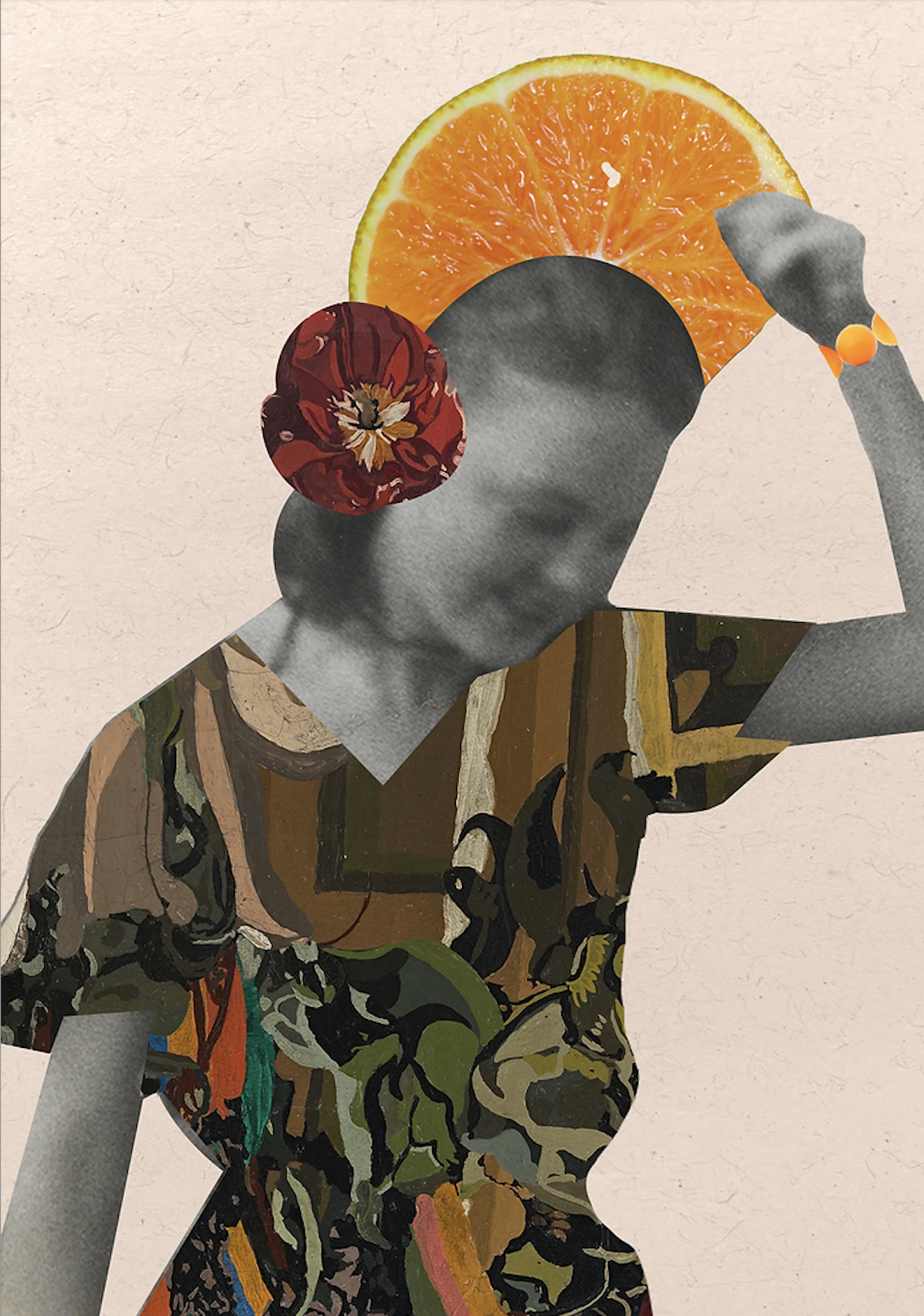
ANNE HARVEY
Chicago, 1916 - Paris, 1967
Born in Chicago in November 1916, Anne Harvey came of age within a family of writers, poets, and cultural figures whose networks would prove formative. When the Depression depleted the family's modest inheritance, she moved to Paris with her mother Dorothy Dudley, who was a poet, a critic, and the author of the first biography of Theodore Dreiser, and her aunt Katherine Dudley, whose deep integration into the Parisian avant-garde opened crucial doors for Harvey.
In Paris, Harvey received private instruction first from Fernand Léger and later, at Matisse's recommendation upon viewing her work in Léger's studio, from Constantin Brancusi — an endorsement that underscores the seriousness with which her peers regarded her practice. Her work drew sustained attention from some of the century's most demanding eyes: Brancusi contributed a text for her debut exhibition at the Galerie de Beaune in 1938, one of only three short published texts he produced in his lifetime. Alberto Giacometti, Andre Masson, Alexander Calder, and John Ashbery each wrote or championed her work. Jules Pascin drew her portrait in 1929; Brancusi, who rarely photographed figures, made an exception for Harvey, capturing her in his studio.
Peggy Guggenheim included Harvey in both landmark exhibitions at Art of This Century: Exhibition by 31 Women (1943), where she showed Still Life (1942) and The Women (1945). The subsequent solo exhibition at a Chicago gallery in 1945 prompted critic Eleanor Jewett to declare the arrival of "a new star to the art world," praising her draftsmanship as surpassing Matisse in certain drawings. Harvey's personal life was marked by a long, consuming relationship with Georges Duthuit, son-in-law of Matisse; she died in Paris in 1967, at 51, under unresolved circumstances involving carbon monoxide asphyxiation. Following her death, Marcel Duchamp sought to organize a posthumous exhibition of her work, but his own death the following day precluded it.
Harvey's critical recognition has gained momentum in recent decades. Her nephew, Steven Harvey, has championed her estate through Steven Harvey Fine Art Projects in New York, most recently with Anne Harvey and Raymond Mason: In Paris (2022), which drew renewed critical attention–critic John Yau in Hyperallergic, described her work as belonging to "a club of one" — resembling no precedent and yielding no followers. Her work, Tulips (c. 1940), was included in 31 Mujeres at Fundación MAPFRE, Madrid (2024–25) and 31 Mulheres at MAC/CCB, Lisbon (2025). Harvey’s works are held in private collections and the artist's estate; scholars and curators continue to advocate for their entry into permanent museum collections.
Work by Anne Harvey is maintained as part of the 31 Women Collection to preserve the legacy of the first all-women's exhibition in the United States on record and to maintain Harvey's contributions in the record of art history.